Three specialists. One structure.
Aii Property distributes. SIRE Group sources, refurbishes and delivers. Myshon operates — nationally, at scale.
Aii Property is a distribution business, not a sales floor. Every enquiry follows the same professional path — so you're advised, never pressured.
Tell us whether you're an investor or an adviser, where you're based, and what you'd like to understand. No obligation — an enquiry starts a conversation, not a sales process.
Your enquiry is matched to a professional broker or IFA in our international network — someone who understands your market, your currency and your objectives, and who acts for you.
Property pack, due-diligence questions, your own independent solicitor, exchange and completion — your adviser walks you through each step alongside our deal team. Target: 10–12 weeks.
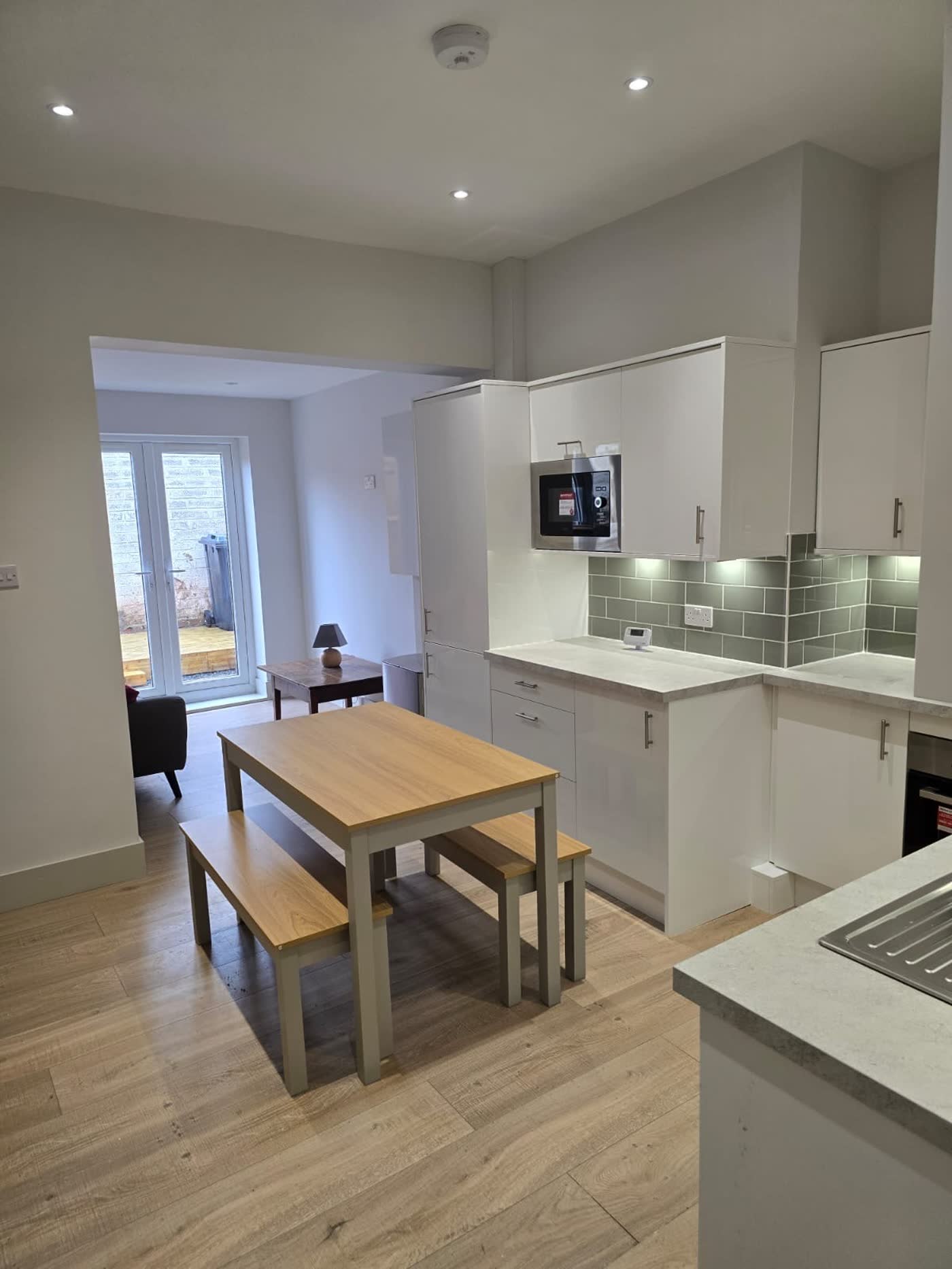
Refurbished houses across County Durham — let under a 25-year management agreement with monthly reporting from day one.
*Guide figures based on the standard 2-bed worked example (£127,400 purchase, 12% target net, £15,288 year-1 target income). Confirmed pricing and projections are issued in each live property pack, subject to the property pack, lease documentation and legal due diligence. Portfolio homes shown are representative of the housing type. Property values and income can go down as well as up; returns shown are targets, not guarantees.
A real house. A real tenant.
A real income flow.
No pooled funds, no paper promises — a freehold home on an English street, housing someone who needs it, paying you from the system that funds it.
An income-led market, not a prestige-led one — low entry prices, strong local-authority demand for compliant supported accommodation, and real connectivity.
Fully refurbished freehold houses at a fraction of southern-England pricing — the arithmetic that makes a 12–13% net target possible.
Semi-detached and terraced family houses — easier to manage, maintain and return to mainstream residential use than HMOs or blocks.
Durham sits on the East Coast Main Line — around 20 minutes to Newcastle and under 3 hours direct to London King's Cross.
Local authorities carry a statutory duty to house vulnerable people and face a long-term shortage of compliant supported accommodation.
Before the yield, the structure or the property pack — the reason this asset class exists. Across the UK, many people cannot access stable housing through the normal private rental market, and councils cannot meet the need alone.
Figures drawn from UK government and housing-sector statistics; indicative as at 2026 and subject to periodic revision.
Local Authorities — England's local councils — have a statutory duty to help people who are homeless or at risk of homelessness. Most do not own enough suitable housing of their own, so the gap is filled by trusted private partners providing safe, compliant, well-managed homes.
This demand is not driven by fashion, prestige or short-term market sentiment. It is driven by a long-term shortage of suitable housing and a legal obligation to address it — which is why the sector behaves differently from mainstream buy-to-let.
Transitional housing sits between supported accommodation and independent living: ordinary houses for people who need a well-managed home and light-touch support while they move toward independence. Not a care home, not a hostel, not an HMO.
Explore where the portfolio sits — from national context to the towns themselves. Toggle between the UK view and the County Durham area.
Town-level locations shown for illustration — full addresses are released in each live property pack. Durham sits on the East Coast Main Line: around 20 minutes to Newcastle and under 3 hours direct to London King's Cross.
The sector's past failures came from inflated fixed-rent promises. The pass-through lease is the correction: real income, from real funding flows, reported to you monthly.
| Fixed-Rent Schemes | Pass-Through Lease | |
|---|---|---|
| Income basis | A fixed promise from the operator | Real property income from the funding system |
| When stress hits | Operator absorbs losses until it fails | Transparent — you see the real flow monthly |
| Alignment | Operator incentivised to overpromise | Landlord, operator and provider aligned |
| Upside | Capped at the fixed figure | Surplus may return to you or fund a sinking fund |
| Track record | Repeated sector failures | Built on operational infrastructure at scale |
Transparent does not mean risk-free — income remains linked to occupancy, eligibility, funding rules and operational performance. Always take independent legal, tax and financial advice.
Eight terms appear throughout this site and in every property pack. Understanding them makes everything else straightforward.
Outright, permanent ownership of the property and the land it stands on — your name on the Land Registry title.
The local council responsible for housing in an area. Identifies housing need and arranges accommodation, often through private partners.
An organisation approved to provide social housing — typically a housing association, charity or specialist operator.
A UK government welfare payment. For eligible tenants it can include a housing-cost element that helps pay rent.
An older form of housing support, still used in many cases, helping eligible people pay their rent.
The Department for Work and Pensions — the UK government department responsible for welfare, including housing-related payments.
A lease where landlord income derives from the property's real income after operating costs — not from a fixed promise.
The UK government's minimum benchmark for housing condition — the standard every home is refurbished to before occupation.
Because the lease is pass-through, running yield responds to real occupancy — below target under stress, above it when performance is strong.
Indicative running yield vs occupancy
| Effective occupancy | 2-Bed (12% target) | 3-Bed (13% target) |
|---|---|---|
| 50% | ≈ 9.1% | ≈ 10.5% |
| 60% | ≈ 11.3% | ≈ 12.7% |
| 70% | ≈ 13.4% | ≈ 15.0% |
| 80% | ≈ 15.5% | ≈ 17.0% |
| 90% | ≈ 17.6% | ≈ 19.1% |
| 99% (sample record) | ≈ 19.5% | ≈ 21.0% |
Interpolated from portfolio occupancy analysis; the 2-bed clears its 12% target at roughly 60–70% occupancy. Illustrative only — running income is linked to occupancy, eligibility, funding rules and operational performance, and is not guaranteed.
25-year target income projection (CPI+1%, illustrated at 4% p.a.)
| Year | 2-Bed target net | 3-Bed target net |
|---|---|---|
| Year 1 | £15,288 | £22,885 |
| Year 5 | £17,885 | £26,772 |
| Year 10 | £21,760 | £32,572 |
| Year 15 | £26,474 | £39,629 |
| Year 20 | £32,209 | £48,214 |
| Year 25 (cumulative) | £39,188 (£636,683) | £58,661 (£953,067) |
Based on the worked examples: 2-bed £127,400 at 12% target net; 3-bed £176,040 at 13% target net; CPI+1% annual upward-only rent review illustrated at 4% p.a. Projections are targets, not forecasts or guarantees.
Historic portfolio performance from Myshon's national operation — presented as data, never as a guarantee of future returns.
Figures reflect a 600-unit transitional housing sample over 12 months; occupancy across Myshon's whole portfolio is 95%. Historic operational data is not a guarantee of future performance.
Transitional housing is a form of supported housing: stable homes with light-touch support for people moving toward independence — care leavers, people leaving domestic violence, and households from local-authority waiting lists. For investors, it is an income-led UK property investment where rental income is derived from government-funded housing-cost payments rather than the open rental market. It is one of the few UK property sectors where demand is structural — driven by statutory local-authority duties — rather than cyclical. That combination of income and measurable outcomes is why it is increasingly described as a social impact property investment.
Investors researching assisted living investments or supported living property often mean this same sector. Strictly, our homes are not assisted living — there is no 24-hour care element — but the investment logic those searches describe (long management agreements, specialist operators, welfare-backed income) is exactly what transitional housing offers, with the added benefit of owning a standard freehold house that can return to mainstream residential use. Our supported & supportive living investment guide decodes the terminology in full.
Standard UK buy-to-let typically nets 4–6% after agent fees, voids and maintenance. Transitional housing targets 12–13% net because the property is let under a 25-year management agreement to a specialist operator, with operating costs funded through the service charge and a CPI+1% annual upward-only rent review. The trade-off is honest: income is linked to occupancy and funding performance, and there is no "guaranteed rent" — a claim we'd encourage you to treat as a red flag anywhere in this sector.
Many investors describe what they want as passive property income: no tenants to find, no repairs to arrange, no agents to chase. Operationally, this is that — Myshon handles referrals, collection, compliance and maintenance, and you receive monthly statements wherever you are in the world. But no property investment is truly passive or risk-free: values and income can fall, and independent legal, tax and financial advice is essential before proceeding.
Six in-depth guides for investors and advisers who want to understand exactly what they are buying — the housing system, the asset, the location, the structure and the practicalities of owning from overseas.
How UK transitional housing delivers measurable social impact alongside a 12–13% target net yield — and what "impact investing" really means in residential property.
Read the guide →The arithmetic behind an income-led location strategy — entry pricing, Local Authority demand, East Coast Main Line connectivity, and the towns the portfolio sits in.
Read the guide →Supported living, supportive living, assisted living, transitional housing — what each term means, how the income models differ, and the questions to ask before investing.
Read the guide →The full picture: the funding flow, the pass-through lease, the buying process, overseas ownership, tax basics and the risks — explained honestly, end to end.
Read the guide →Written for readers new to UK housing: the shortage, Local Authorities, Universal Credit and Housing Benefit, who lives in the homes, and the six-step income flow to you.
Start here →The house itself: typical property profile, the works completed before anyone moves in, the Decent Homes Standard, the service charge, and the operator behind it all.
See the standard →The 10–12 week remote purchase, cash vs mortgage, UK banking, repatriating income, and UK tax basics — SDLT, the Non-Resident Landlord Scheme and CGT.
Read the guide →Start an enquiry and we'll introduce you to a vetted broker or IFA in our network who understands your market. They'll guide you through the model, the property pack and the due diligence — at your pace.
We don't sell directly and we don't provide financial advice — every investor is advised by a professional introducer.
Full broker pack, due-diligence documentation, training, client-forwardable materials and qualified investor introductions — plus direct access to the deal team from enquiry to completion.
Investor enquiries from this site are distributed to network brokers.
No — and we'd encourage caution with anyone who says otherwise. Income is derived from government-funded housing-cost payments and is linked to occupancy, eligibility, funding rules and operational performance. The 12–13% figure is a target net yield, not a guarantee. What you get instead of a promise is transparency: monthly income and expenditure reporting through a ring-fenced client account.
No. Aii Property is a distribution business — we build the product, the evidence and the introductions. Your enquiry is introduced to a vetted professional broker or IFA in our network, who advises you and guides your purchase alongside the deal team. We do not provide financial advice.
A UK residential property — normally a freehold 2 or 3-bedroom house — fully refurbished to the Decent Homes Standard and capable of returning to mainstream residential use, subject to the lease and legal advice. You appoint your own independent solicitor and complete a normal UK conveyance.
Those schemes promised inflated fixed rents that the underlying income could never support, with weak providers and no operational infrastructure. The pass-through lease pays you from the property's real income after operating costs, aligning landlord, operator and provider. Myshon brings the operational layer those schemes lacked — 11,000+ homes, 150+ staff, national referral and compliance teams.
Yes — the model suits overseas investors seeking GBP income from a hands-off UK asset. The purchase completes remotely through your independent UK solicitor, and reporting is delivered monthly wherever you are. Non-resident tax (including NRLS) applies; take independent tax advice.
Property review, reservation, then your solicitor runs full due diligence — title, lease, searches and contracts — through exchange and completion. We target 10–12 weeks from introduction to completion.
Income is derived from government-funded housing-cost payments — Universal Credit or Housing Benefit, funded by the DWP and administered with the local authority. The eligible resident claims; the provider and operator structure administers the claim and collects; operating costs are funded from the service charge; the remaining landlord rent passes through to you. The government does not guarantee your rent — it funds the housing-cost payments the resident is eligible for.
Typically a new or upgraded boiler and heating, electrical upgrades, fire safety and compliance works, full redecoration, new flooring, kitchen and bathroom upgrades, furniture and white goods, and all gas, electric and EPC certification — followed by a final compliance inspection and fit-out to Local Authority requirements. The benchmark is the Decent Homes Standard.
Most portfolio properties are acquired on a cash basis, which simplifies the legal process, speeds completion and removes mortgage interest as an ongoing cost. UK buy-to-let mortgages are available to some international buyers but criteria vary by lender, nationality and residency. Remortgaging later to release equity is possible in principle once the property is established — take specialist broker advice at the right stage.
Stamp Duty Land Tax on purchase, including a 2% non-resident surcharge; UK income tax on rental income under the Non-Resident Landlord Scheme, reduced by allowable deductions such as management costs and service charges; and potentially Capital Gains Tax on any gain when you sell. None of this is unusual for UK property ownership, but all of it needs independent advice from a UK accountant.
The service charge funds maintenance, insurance, tenant support, compliance, management, utilities, void provision and repairs — portfolio data indicates around £25 per unit per week in average maintenance spend. Where expenditure comes in below budget, the unspent balance may be returned to the landlord or retained as a sinking fund for future works, meaning effective return can exceed the target in some periods. That is portfolio data, not a promise.
Re-letting is the operator's job. Myshon's national referrals network places around 80 tenants a week, and historic portfolio data shows typical voids of about one week a year on the 600-unit transitional sample, with average tenant stays of 18–24 months. Historic operational data is not a guarantee of future performance.
Yes — you own the freehold and can sell. Resale takes time and the buyer pool may be narrower while the lease is in place, but because these are ordinary 2 and 3-bedroom houses capable of returning to mainstream residential use, subject to the lease and legal advice, there is a natural resale audience of owner-occupiers and standard landlords. That optionality is deliberate.
People who need stable accommodation while moving toward independence — care leavers, people leaving domestic violence, households from local-authority waiting lists. This is light-touch supported housing, not 24-hour care. Alongside the financial case, each home reduces pressure on temporary accommodation and gives someone a genuine route forward.
Tell us a little about you. We'll introduce you to the right professional adviser in our network — usually within one working day.
Your enquiry is on its way. Expect an introduction to one of our network advisers within one working day.